Author: admin

  • World Maps


    Atlapedia

    Choose from physical or political maps, and then select the country you want. You can also access facts on geography, climate people, religion, language, history and more.

    World Atlas
    Find a superb collection of maps and geographical information gathered from the Internet and listed at Geography at About.com.


    CIA World Fact Book
    Countries are listed alphabetically. These maps are clear and simple-to-read, with tabs for further information.


    Flags and Maps of the World

    Choose a continent and then a country, from either its name or its flag. You will be taken to the country’s flag and a simple, clear map. No facts are given. Visit the games and fun sites, too.


    Infoplease Atlas

    Click on a region of the world or try the map index. The maps are clear and simple, with no additional country facts.


    Online Map Creation
    Using the input form you can create your own maps online. Change the projection and see the difference! This is quite a challenging site, so you may need some adult assistance.


    National Geographic’s Map Machine

    A great tool for the older student, though it takes some time to understand all the functions. Choose from dynamic maps, atlas maps or flags and facts.


    Outline Maps
    This selection of outline maps for use in the classroom or at home can be printed or downloaded, for adding to homework assignments.


    Working with Maps – Map Adventures
    Designed with the younger student in mind (K-3), these lesson plans, based on a story with activity sheets, teach basic map reading skills.


    Working with Maps – What do Maps Show?
    These lesson plans and activity sheets teach map reading skills to grades 5-8.


  • Medieval History

    Medieval History


    Castles for Kids
    Investigate this interesting perspective of life in a medieval castle. It provides information on structure, residents, knights, hunting, and royal feasts.

    Henry VIII and the Tudors
    Just how many wives did he have, and who were they? What sort of a person was he? Designed for 7-10 year olds, this site gives interesting facts about Henry VIII and his wives.

    Janet’s Viking Web Site
    Learn more about Viking ships, homes, warriors, gods and people.

    Journey Through The Middle Ages
    There are three different ways to view this site. You can play a game, simply wander through the castle or if you really want the facts, you can see the information pages.

    Life in the Middle Ages
    Step back in time to the days of imposing castles, knights in armor defending the kingdom, and noblemen ruling over the serfs. This looks at life in the Middle Ages.

    Medieval Madness
    In this project for kids by kids students have searched for the best reference sites on varied topics relating to the Middle Ages. They have then put together open-ended questions to answer.

    Medieval Village Life – An Interactive Lesson
    This Interactive lesson teaches about feudalism and life in a medieval village. With each step there is an interactive quiz to check your understanding.

    Middle Ages Exhibit
    What was it like to live in the Middle Ages? Explore feudal life, the towns, churches, homes, clothing, health, arts and entertainment of this period. The exhibit is clear and easy to read, but there are very few illustrations.

    Tales From Camelot
    At this site, written by kids, there is a collection of stories about Camelot, written as if the characters are telling them. It gives an interesting look at some of the better-known knights from the stories of King Arthur and the Round Table.

    The Tower of London
    Tour the Tower of London with Reginald Raven, who lives there. This site is especially for kids and gives lots of interesting details about the Tower and what went on there.

    The Vikings
    Who were the Vikings, where did they go and why? Learn about their religion and their settlements. Although the information is primarily aimed at 7 and 8 year olds, links are included for older children.


  • Regional History

    Regional History


    Africa


    African History
    Africa is made up of many countries, each with their own past. At this site you will find links to historical information on several specific African countries, as well as a general overview on African History.

    Colonial Africa
    This is a very well presented introduction to the history of colonialism in Africa. It starts with a brief list of important facts you should know, goes on to details about early explorers and the colonies, ending with the indpendence of African Nations. It even touches on Liberia, the nation founded by freed American slaves, and the only African nation never to have been occupied by a colonial power.

    Story of Africa
    The BBC collected articles from African historians on the history of Africa, and put them together to make this huge site. It has links to different regions and eras of African History.

    Australia and New Zealand


    Australian Timeline
    This very brief document gives the major dates in Australian history since it was first sighted by the Europeans in 1606.

    Early Queensland History
    Although Australia had British settlements as early as 1788, the first settlement in Queensland didn’t happen until 1824. This first settlement was a convict colony. Learn more about the exploration and settlement of Queensland.


    Australian History

    Here you will find a history of Australia prior to colonization, as well as post colonization. Discover why Britain chose to send her convicts there, and what became of them.

    The Whitianga Museum and Captain Cook’s Arrival
    Read about Captain Cook’s first expedition to New Zealand, and how the local inhabitants treated him. This page is a little difficult to read as it has excerpts from his diary, written in old English.

    Canada

    Canadian History Timeline
    This well-illustrated timeline begins in the age of the dinosaurs and continues to the present day. It is clear and colorful, giving a very little information, but enough to whet your appetite for Canadian history.

    Famous Canadians – Timeline
    From 1700 this timeline lists the birth dates of important people in Canadian History. Each name has a link to a brief biography. This is a very useful starting place for finding out more about Canadian History.

    Head-Smashed-In Buffalo Jump
    This buffalo jump, designated by UNESCO as a World Heritage Site, demonstrates a custom practiced by native inhabitants of North America for almost 6000 years. Learn about the history of the Blackfoot tribe, the buffalo jump and more at this informative and interesting site.

    Early Days – Homesteaders
    Early settlers to Western Canada undertook long and difficult journeys, in the hopes of owning land. Follow these early settlers from their journey, through their house building and onto school and community activities.


    Canadian History
    This is a list of sites with useful information on Canadian History for kids. There are also links to lesson plans for teachers of elementary level history.

    India

    History of India
    The Indian government has produced this site with information on different eras of Indian History. The information stretches from the Indus Valley Civilization to the New State, covering 2,300 years of history.

    India Under the British
    From the 1600 Britain established trade in India, and quickly cam to power. The British East India Company ruled over India for over 200 years but was eventually replaced by the British Government. Learn about the initial trading company, the mutiny that led to its downfall, and the British rule that followed.

    Indian Mutiny
    Although this site is written with older students in mind, it presents a clear history of the Indian Mutiny of 1857. There is a brief background of the history and reasons leading up to the mutiny, as well as a description of the mutiny itself.

    Mohandes Karamchand Gandhi
    Mohandes Gandhi, otherwise know as Mahatma Gandhi, led the nonviolent protest against British Rule in India. Eventually he won independence for India. Read about his early life, time spent in South Africa, and eventual rise to power in India.


  • Ancient Greece


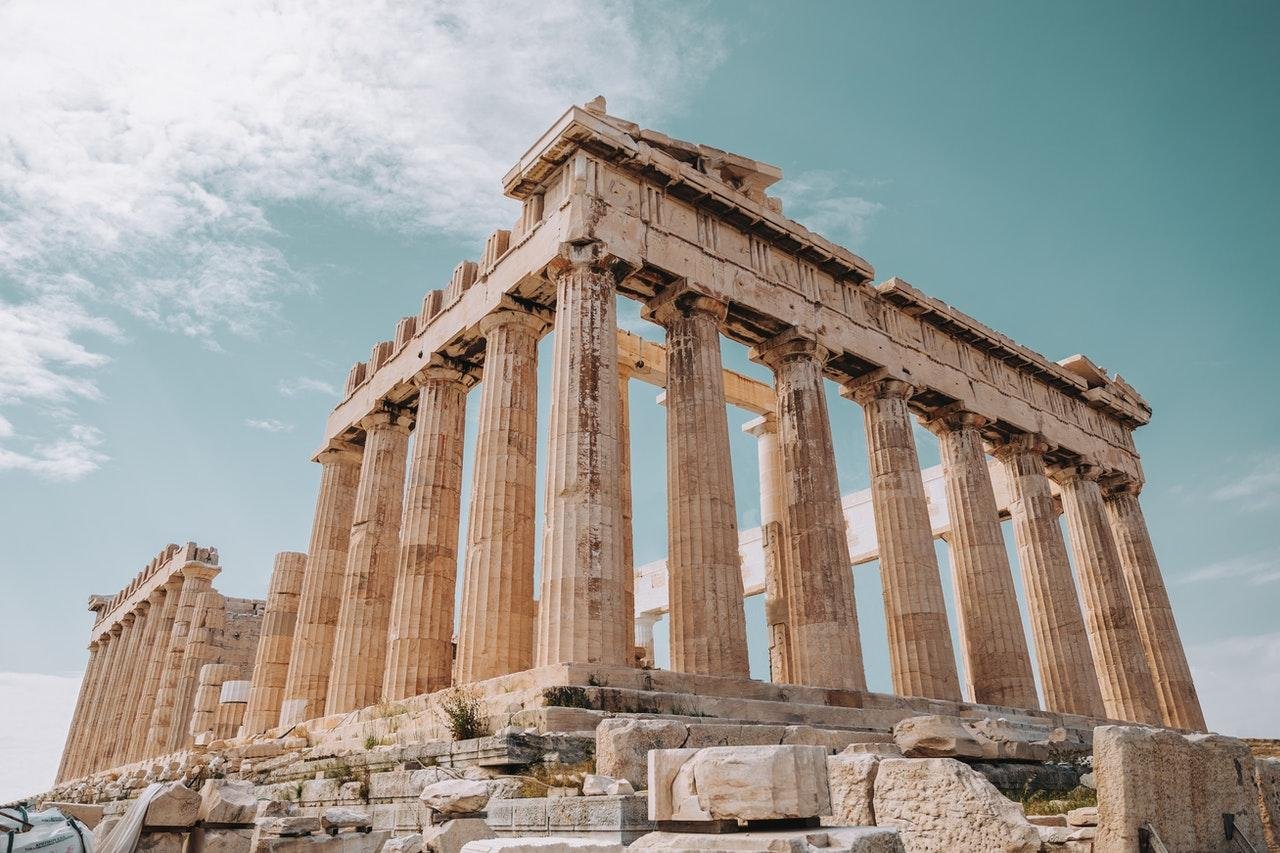
    Ancient Greece is the era in Greek history that stretched for about a thousand years. Historians believe that this culture was responsible for the underpinning of Western Civilization. So much so that it made commanding influence in the Roman Empire to say the least. Now, ancient Greece not only formed the geographical peninsula of contemporary Greece but also plugged in areas of Hellenic culture that matured at those times in the hands of the Greek.

    Conventionally, you will find that the Greek period is traced back with the date of the earliest Olympic Games in 776 BC. But several historians beg to differ as they have now lengthened the term back to about 1000 BC. On the other hand, end of the ancient Greek era came into effect with the death of Alexander the Great in 323 BC. However, Hellenistic or the incorporation of Greece into the Roman Republic in 146 BC followed soon.

    Throwing light on Greek history, you will know that the Greeks had actually migrated southward into the Balkan peninsula owing to influences initiated in the late 3rd millennium BC. The period from 1600 BC to 1100 BC speaks of the sovereignty of King Agamemnon and not to mention the wars in opposition to Troy as reflected in the epics of Homer. Inscriptions and writings by historians along with writers like Herodotus, Thucydides, Xenophon, Demosthenes, Plato and Aristotle have survived to tell the tales of these times.

    Monarchy was prevalent in ancient Greece. The coercion of the monarchs led a small class of landowners to shape a warrior aristocracy that took to small inter-city wars to cast out the monarch. This gave rise to a mercantile class in about 680 BC. Greek politics was highlighted in the face of Athens and Sparta’s rivalry. However, Sparta formed a permanent militarist regime under a dual monarchy while in Athens monarchy was abolished in 683 BC, which gave way to a moderate system of aristocratic government.

    The Persians made war and it wasn’t long before they established control over Ionia that consisted of eminent centers like Miletus and Halicarnassus. The Ionian Revolt followed in 499 BC much with the help from Athens and some of the other Greek cities. It was the Greeks, under the Spartan Pausanius that eventually crushed the Persian army at Plataea. Winning battles and wiping out the Persians, Athens regained overall power. 

    As regards the Greek society, there were two kinds -the free and the slave. Unlike the slaves the free people had protection of the law under their belt. The slaves were the most deprived bunch of people. They were ripped of any power or status and not even the right to have a family and possess property. As a matter of fact by the 5th century BC, the slaves constituted about one-third of the sum inhabitants in a number of city-states. Four social classes on the basis of wealth existed in Athens while in Sparta the male citizens earned the title of “equal” once they were through with their education.

    In the face of architecture, the Greeks excelled enormously. Low apartment buildings or single-family homes featured in the city lives of ancient Greece. There were residences, public buildings, and temples next to the agora. The male members of the house were responsible for sustaining the family by earning while the women were more or less engaged in household work. Agriculture was the chief means of livelihood for the Greeks.

    As regards the clothing, these men and women were dressed in loose Peplos and Chitons. Multihued designs formed a part of the tunics and these were sported with a belt. Cloaks, hats and leather boots in wintry weather and sandals in summers are what the Greeks wore.

    Ornaments and cosmetics were also common amongst the ladies. Religion played quite a role in Greek civilization. The Greeks were very religious people and they worshipped many Gods. Truth be told, their God were in the likes of the different elements of nature. What’s more these Gods were honored by means of contests in music, drama, and poetry. Festivals were also prevalent like for instance the huge Panhellenic festivals, which were held at Olympia, Delphi, Nemea, and Isthmia.

    Education was under wraps except for Sparta. Public schools sprouted during the Hellenistic period in more than a few city-states. Besides formal education, they were also trained in singing and playing instruments. Not just that, they were also qualified as athletes in favor of military service.

    Ancient Greece has indeed made great strides on all fronts and it well remains as a standing example for all of us.


  • Eid Al Fitr

    A Muslim
    Celebration


    Muslims
    have two major celebrations in the year. Both are called Eid (meaning
    celebration). Eid Al-Fitr, or the Celebration of Breaking the Fast,
    marks the end of Ramadan. Ramadan is the month of fasting.


    Eid Al-Fitr is the celebration that comes at the end of Ramadan. Ramadan is a
    month of fasting, every day from dawn until sunset. The Islamic Calendar follows
    the moon and so each year, the dates are shifted forwards by about eleven days
    in the normal calendar. Ramadan is the ninth month of the Muslim year, and is
    followed by Shawal. The first three days of Shawal are the Eid days.


    When it is

    This year, (2002) the first day of Eid will fall on December
    6 in most countries.
    The reason it differs from country to country is the calendar. It is a little
    bit complicated, but each month has either 29 or 30 days. On the 29th night of
    the month, people look for the new moon. If it is spotted, then he month has 29
    days, and the next day is the start of a new month. If it is not spotted the
    month continues on for a 30th day, and then the new month starts. These days,
    astronomers can predict the months and phases of the moon very accurately, but
    it is still traditional for the moon to be spotted by someone. So, if the sky is
    overcast over an entire country, even if the moon is there, it can’t be seen
    and the month continues for one more day.

    What it is

    Eid Al-Fitr is all about celebrating the good things that we have received,
    God’s (Allah’s) bounty and our family and friends. Every household who can
    afford it must pay a form of tax in the days leading up to Eid. It is a very
    small amount, and is paid for each person in the family. Traditionally the tax
    was in the form of food, although most people now give the equivalent in money.
    The money or food is given to poor people, so that they can celebrate Eid, too.
    The tax is not collected by anyone, and no one is forced to pay it, but it is
    required as a religious act, and almost everyone pays.

    The Celebration

    Many people decorate their houses for Eid. This is rather an odd thing, since
    no-one is sure when Eid is, until the last minute, and so decorations are put up
    very late on the last day of the month.

    Everyone has new clothes for Eid. The last few nights of Ramadan it is almost
    impossible to get into the shops, as everyone is buying their clothes. A
    complete outfit is normal, right down to the shoes, and even the headscarves for
    the women.

    On the morning of Eid, everyone gets up very early to go to the prayers.
    These are special prayers, held only at Eid. They are held only in very big
    mosques, or in large open areas, such as football stadiums. They are held about
    80 minutes after sunrise, so in the summer months it is very early.

    After the prayers everyone goes home to eat breakfast and then the
    celebrations really begin. It isn’t common for children to receive gifts.
    Instead they receive money. The money should be in the form of a brand new bank
    note or coins. The amount given is small, usually in the region of about $3, but
    still they get plenty. Everyone who visits the children, or everyone whom they
    visit, gives then the gift of money. In a large extended family, with lots of
    friends, the children can end up with a small fortune!

    Sometime around midmorning people start to go out visiting. They visit
    neighbors and friends in the morning. At each visit special cakes are eaten, and
    the children receive their money. The visits are very short as there are plenty
    to make. Dinner is spent with family. The traditional meal varies from country
    to country, the only standard thing being the special cakes. Each day of the
    holiday is spent with a different branch of the family, so that everyone gets
    visited. In the evening the visits start up again. This goes on for three days,
    but money is normally only given to the children on the first two days.

    In between visiting, people make trips out into the streets. Many streets
    have a sort of fair going, with music, dancing, fireworks, kids’ games and much
    more. Here the children get to spend their money. They buy candy, soft drinks,
    toys and rides. Everyone has great fun, and the children are always disappointed
    when it is over. The adults, on the other hand, are usually worn out and glad of
    the rest!


  • Ancient Civilizations


    Our present civilization is indebted to our predecessors who with their might and mind have laid the foundation of human civilization throughout the world. We will now discuss some of the ancient civilizations in brief.

    The History Of Ancient Greece

    The Greek civilization is the foundational civilization of the western world. Ancient Greece is not limited to today’s Greek peninsula, all the places where the Greeks established Hellenic culture in ancient times comes under this purview.
     
    Ancient Greek empire influenced the spheres of science, technology, architecture, art, language, education, polity, and philosophy. Ancient Greece stimulated Renaissance in Western Europe. Greek classicism was revived to elevate literature in the 18th and 19th century Neo-classical period in Europe and in the Americas.

    The Mighty Roman Empire

    The Roman Empire is the base structure of European civilization. Though the Romans were the conquerors they learned a lot from the Greek heritage. Usually the name of Ancient Rome is uttered together with ancient Greece as contenders of “classical antiquity”. Ancient Roman civilization has a huge influence on European law, war, art, architecture and language, which is still continuing its legacy. 

     The Roman Empire spread its rule on the vast landmasses of Western Europe and areas surrounding the Mediterranean Sea. During the 12th century Roman Empire transformed from a monarchy to an oligarchic republic to a huge empire.

    The traditional date of the fall of Rome is 476 B.C after the vast empire was broke into independent kingdoms in the west and the eastern empire came to be known as the Byzantine empire, governed from Constantinople.


    Ancient China

    China has preserved the earliest written evidence of civilization of 13th century B.C Shang dynasty. The evidences are written inscriptions, prediction records on animal bones and shells called “oracle bones”. The last of the nine capitals of Shang is modern Anyang of modern day Henang. The Zhou dynasty emerged as the new power in 2nd millennium B.C. The Zhou king Wu with the help of his uncle, the duke of Zhou defeated the Shangs in the battle of Muye. The Zhou king established the concept of “Mandate of Heaven” to strengthen his rule and this concept lived long through the gradual succession of the dynasty.

    Initially the area of modern Xian, near the Yellow river was the capital of Zhou dynasty but gradually they expanded their rule to the Yangtze River valley. This is the first ever record of north to south migration of Chinese population.

    However, the 8th century episode of Spring and Autumn periods was the history of decentralization of Zhou power in the hands of local leaders who rose to power. China now had hundreds of small states. The arena of intellectual thoughts saw the rise of many intellectual movements like the Hundred School of thoughts, Confucianism, Taoism, Legalism and Mohism.

    In the 5th century B.C these few states battled with each other. This period is known as the Warring states period. King Ying Zhen , the king of Qin annexed, assimilated  and unified several states and proclaimed himself as the First Emperor of China.

    Ancient India

    As per Sanskrit literature Ancient India revolves round the rich history of the classical Hindu age termed as “golden age”. This age began during the 500 BCE with the Mahajanapadas, the sixteen monarchies and republics, which occupied the territory of Indo-Gangetic plain stretching from Afghanistan to Bangladesh. Four great Mahajanapadas were Magadha, Kosala, Kuru and Gandhara.

    Ancient India had a grand oral literary tradition starting with the Rig Veda, compiled in circa 1500B.C. The epics Ramayana and Mahabharata belong to the classical period. Indian history embraced the well-recorded written form from 6th century B.C after the birth of Buddha and Mahavira.

    Amongst the sixteen Mahajanapadas, Magadha rose to eminence and became famous under the legendary rule of king Ashoka of the Maurya dynasty. The south was under the rule of the Chera, Chola and the Pandya dynasties.

    After Ashoka, the Gupta Empire integrated the north India (320-550 BCE). Gupta period saw immense progress in law, order, art, mathematics, education, Sanskrit drama, grammar, logic, metaphysics, medicine and astronomy. The Gupta Empire declined with the invasion of the Hunas.

    The south Indian Tamil people of the Sangam age traded with the Greco Roman world from the coast of Malabar. They had connections with the Greeks, Romans, Phoenicians, Arabs, Jews and Chinese.

    India was the richest subcontinent of the world till the Mughal period.

    The Ancient Civilizations Of Sub- Saharan Africa

    The ancient civilization of Egypt is the most famous African civilization mothered by the river Nile. It spanned over three and a half millennia. The inception of the civilization was the unification of Nile valley polities around 3500 B.C and ended in 30B.C with the Roman conquest.

    Egyptian civilization balanced nature and human resources effectively with the gift of fertility from Nile.

    Ancient Civilization Mesopotamia

    The name Mesopotamia is derived from the Greek words for “between” and “river”. Ancient Mesopotamia was spread in the Tigris and Euphrates river basins and the area in-between. Mesopotamia is referred to as the “Cradle of Civilization” as it is the place where first literate societies evolved in the 4th millennium B.C. The time span of ancient Mesopotamia is from 4th millennium BCE to the rise of the Achaemenids in 6th century BCE.

    Mesopotamia homed ancient civilizations like the Akkadian, Assyrian and Babylonian empires.

    Ur Nammu (king of Ur), Sargon (Established the Akkadian empire) and Hammurabi (Established the Babylonian empire) and Tiglath Pileser (established the Assyrian empire) are some prominent names in the pages of ancient Mesopotamia.

    The History Of Phoenicia

    The ancient Phoenician civilization is a maritime trading civilization, which was centered on the ancient Cannan and did spread across the Mediterranean with its vital concentration on the lands of modern Lebanon during the first millennium B.C.

    The language of the Phoenicians is Phoenician, a member of Canaanite language of the Semitic family. The most important historical sources are the inscriptions. The Phoenician Punic colonies of North Africa are also a valuable source to know about the ancient Phoenicians.

    The Ancient Civilizations Of The Americas

    The Aztecs

    The Aztec civilization is a colorful civilization of Mexico. The Aztecs were Mesoamerican people who called themselves Mexicas, who lived during the 14th, 15th and 16th centuries in central Mexico.

    Mandatory education and a complex yet rich mythology are the chief texture of the Aztec civilization. Practice of human sacrifice was in vogue.

    The Chronicles Of The Olmec

    The Olmec people are the ancient pre-Columbian people of south central Mexico, which roughly corresponds to modern days Veracruz, and Tabasco. The span is roughly from 1200 B.C to 400B.C and the Olmec people are thought to be the predecessor of every principal Mesoamerican Civilization.

    The Inca Civilization

    Inca empire was the biggest pre-Columbian empire of America and one the chief empires in the world. It rose to prominence in highlands of Peru during 1200 BC. Cuzco was the political, administrative and military center.

    The official language was Quechua, though seven hundred local languages were spoken.

    The Inca leadership promoted worship of Pachamama or Mother Earth. The Incas believed Inti or Sun God to be the chief God.

    The Inca Empire was divided in a stratified society. The empire was divided in “senorios”(dominions) and the ruler was the Inca. The economy was based on the collective property of the land. The Inca was undertaken as a massive civilization project based on a mythology of harmony between human, God and Nature.

    The Incas declined with the coming of Spanish Conquistadors.

    Maya Civilization

    Maya Civilization is Mesoamerican civilization, which reached the zenith of art, architecture, mathematics and astronomy. The Maya people developed a fully written system of language. The famed period of 250 to 900 BCE of Maya Civilization is known as Classic period in Mesoamerican chronology. The spread of civilization was from the northern Central America to the southern parts of Mexico. It was a vibrant and lively civilization.

    Here ends the chronicle of the famous ancient civilizations of the world.


  • US Geography


    Farmers Markets – Facts
    Find out what a farmers market is and how it benefits both the farmer and the consumer.


    Do You know your State Flags?
    Look at the flag, and then click on the correct state from the list. If you get it wrong, you are told the correct answer. This is a great way to learn the flags.


    Fun Facts from the Farm
    Here you will find some interesting facts on agriculture and nutrition in California.


    A History of American Agriculture
    Choose any of the main headings to see facts about agriculture. The headings include economic cycles, life in the farm, crops and livestock and many more.


    Latitude and Longitude Look Up
    This site gives latitude and longitude for major cities around the US.


    National Atlas of the USA
    This site has a variety of interactive and multimedia maps showing all sorts of details, from outbreaks of viruses to active volcanoes. Just click on the topic you are interested in and you will be taken to the map.


    States and Capitals
    Choose from the list of states to find details on any state. Details include capital, geographical center, flower, flag, highest point, lowest point and other relevant information.


    US State Capitals Matchmaker
    Match the capital to the State. Try to beat the average time. This game is fun and addictive.


    US States Climate Page
    Click on any state to see a smaller map with the major cities. Then click on a city to get basic climatology information, or monthly tables on temperature and precipitation.


  • US History

    US History


    Meet the Daggetts
    Meet the Daggetts, a colonial family from the 1700’s.
    Find out about their life and the community they lived in.

    Abraham Lincoln
    This is a short biography of Abraham Lincoln.
    It includes such details as what was in his pockets when he died, his sense of humor and his childhood.

    Archaeology at Colonial Williamsburg – Kids Page
    Here you can find out about artifacts in your own home,
    what games kids played during the civil war, and play some games, too.

    Civil War Timeline
    This is a very simple timeline, showing the main events leading up to,
    and included in the American Civil War.

    Follow the Drinking Gourd
    The words of the song, sung by slaves escaping to freedom,
    are written down, with an explanation of what they mean.

    History of the Lincoln Highway
    This is a brief history of the highway, from it’s origin,
    through it’s construction, to its renaming as a numbered highway.

    Jump Back in Time
    Take a trip back in time to any American Era, starting with the Colonial Wars.
    There is a lot of information, here, written in a clear understandable way.


    Johnny Appleseed
    Who was Johnny Appleseed, what did he do and why? Find out here,
    at this clear simple site, aimed at younger children.

    Growing Seasons

    Growing Seasons
    This page gives a brief look at farm life during the early part of the twentieth century.
    Links at the bottom, to each of the seasons, give you more details.

    Living Under Enslavement

    Living Under Enslavement
    Read about what life was like for slaves on a Southern plantation in 1850.
    Enter a slave’s house and learn more about their daily life,
    and how they preserved their African traditions and resisted slavery.

    Pioneer Families
    A brief history of three pioneer families from Kent, Washington, is told here.
    Although the information is very brief, it gives a glimpse into life as a pioneer,
    and some of the difficulties these families faced.

    The Salem Witchcraft Trials

    The Salem Witchcraft Trials
    In 1692, twenty people were executed in Salem,
    for practicing witchcraft. Read about the trials and what led up to them.

    Time Map – US Borders
    Slide the cursor along the timeline at the top of the map, and watch how the United States came to be.
    This map requires shockwave and is a bit slow to load. Be patient.


  • Current Events


    Channel One News
    You can find everything you want right here, with up-to-date current events for kids. There are main International news features, headlines, quizzes and polls, plus archived stories.

    Children’s Express
    Top news stories for kids are presented here, written by kids.

    Earthweek
    This site gives a weekly journal of the most important world events of the week, related to geography. You can see the journal in PDF format, or get a list of newspapers that publish it.

    1stheadlines
    Take a comprehensive look at newspaper headlines, searching by State or Country. Other categories include US politics and general. The search feature allows up-to-the-minute results from newspaper sources around the world.

    NewsDay
    Top stories from the Associated Press, arranged in chronological order. Categories include Top News, International, National and Sports.

    News4Kids
    Archived news stories, written for kids. This site doesn’t offer up-to-the-minute news, but has the main news stories archived by month.

    TIME for Kids
    TIME for Kids (grades 5-12) features people and events in the news, historic profiles, a cartoon of the week, interactive talk back and online quizzes.


  • Math Worksheets


    If Math is a problem area for your child, let me tell you that Math worksheets can really work wonders. These sheets offer an entertaining package of related mathematical problems with variations on solution procedures or principles. This ensures a fun filled way to practice various mathematical operations through a single problem.     

    Moreover, most sources divide the type of sheets according to age and grade and cover subjects from basic mathematics to higher geometry. Moreover, most of them also provide a solution page for verification of the answers.

    Some popular worksheets are:

    1. Add Groups of Shapes
    2. Relate Groups of Shapes
    3. Count Groups of Shapes
    4. Graph Groups of Shapes
    5. Pattern Identification
    6. Simple Integer Addition
    7. Simple Integer Comparison
    8. Simple Integer Subtraction
    9. Which One Doesn’t Belong?

    They can also be in the form of worksheet booklets. For instance, you can have a Multiplication Worksheet divided into three books that concentrate on a particular set of multiplication tables. Say, Book 1 covers the 2, 5, 9, and 1 times tables, Book 2 includes the 3, 6, 4, and 8 times tables and Book 3 contains 7, 10, 11, and 12 times tables.

    What to look for in Worksheets


    Obviously, the Internet is the largest storehouse of free downloadable and printable sheets. The best worksheets should offer interactive mathematical activity and puzzles, covering areas like geometry, number theory, percent, integers, probability, pre-algebra, and statistics. The math worksheets should come with elementary principles, decimals, fractions, percentage, square roots and telling time.

    However, the best sites offering online math worksheets are subscription-based sites that offer worksheets for grade K-8, available in various plans according to your budget, starting from $2. Here you can also create your personalized sheets with premium worksheet generators and they don’t flash advertisements either. Most of these websites accept payments through all major credit cards via PayPal, even without a PayPal account. Once you become a member and have an account and login, you can avail of the site’s Interactive Activity Links too.

    Most of these instructive portals highlight the fact that maths is indeed an entertaining activity. Some of their offers include:  

    K-12 educational mathematics explained in easy language.

    • Recreational mathematics, such as games and puzzles.
    • Worksheets on various topics – create your own or choose a pre-made set.
    • Maths is Fun Forum
    • Worksheets that include addition, subtraction, division, multiplication, time, decimals, fractions and kindergarten.
    • Mathematics Worksheet Factory 3.0: Here you can create your own worksheets for K-10 kids. Categories in these Math worksheets include puzzles, money, time, ratio and percent, tables and drills, number operations, number concepts, numeration, measurement, graphing, geometry, fractions, and algebra.