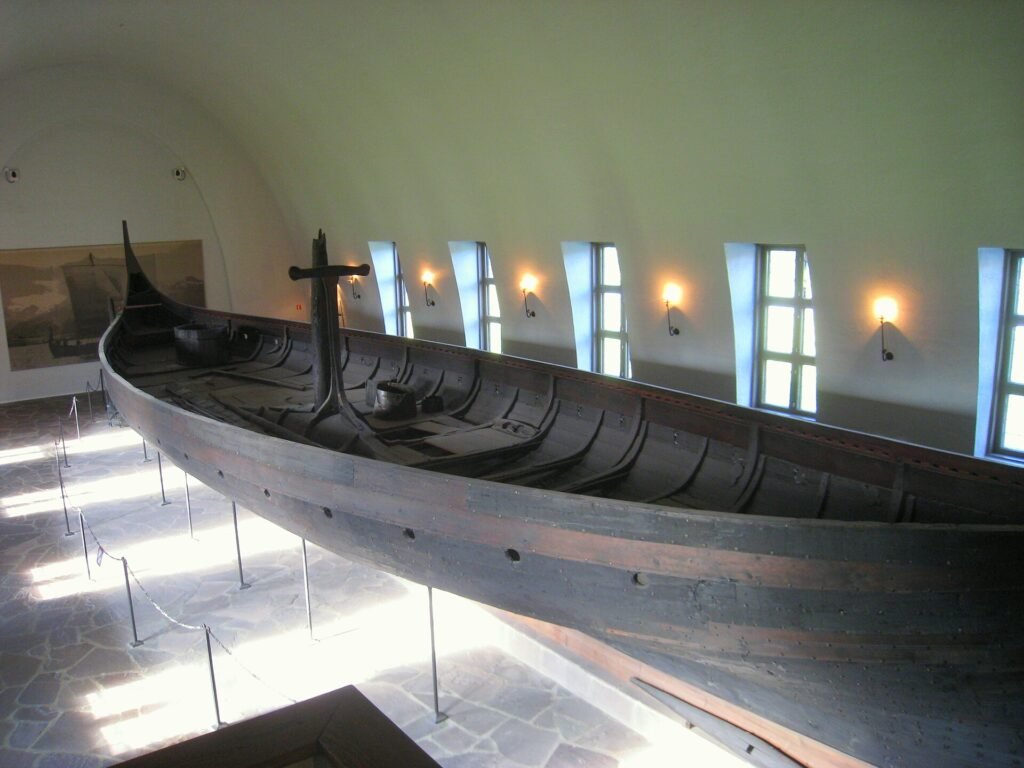
Vikings were seafaring people from Denmark, Norway and Sweden who raided, traded and settled across Europe. Most Vikings were farmers at home. The best-known early Viking raid hit the English monastery of Lindisfarne on 8 June 793. Sources differ on when the Viking Age ended.
This page is part of our world history section. It covers dates, routes, ships and evidence.
Key facts
- Vikings raided the English monastery of Lindisfarne on 8 June 793.
- The Anglo-Saxon Chronicle lists the first Viking landing in Wessex under 787. Modern editors correct the year to 789.
- Around 1003, Leif Eriksson sailed to a land called Vinland, according to The Met.
- Norse people cut wood at L’Anse aux Meadows, Newfoundland, in the year 1021.
- King Harald Hardrada of Norway died at the Battle of Stamford Bridge on 25 September 1066.
- No source from Viking times mentions horned helmets, says the National Museum of Denmark.
Who were the Vikings?
Vikings came from what are now three countries: Denmark, Norway and Sweden. Britannica describes them as independent farmers at home and raiders at sea (Britannica).
The word Viking first named an activity. The Metropolitan Museum of Art explains that a vikingr was a pirate, someone who went abroad on raids (The Met). The word did not name a country.
When was the Viking Age?
Britannica calls the Lindisfarne raid of 793 the first recorded Viking raid in England and in Europe more broadly (Britannica). Some sources give a January date for it. Britannica calls that a probable scribal error and says 8 June is generally accepted.
Many pages say the first Viking landing in England came in 787. That is the year the Anglo-Saxon Chronicle prints, and Britannica cites the 787 entry (Britannica). Daniel Anlezark wrote a 2026 study of the Chronicle. He reports that every version carries “a two-year dislocation” in annals dated from 754 to 828 (Anlezark, 2026). Dorothy Whitelock’s edition prints 789, with 787 in parentheses (Whitelock edition). Use 789 for the landing. Three ships of Northmen came ashore in Wessex. The local reeve, an official, rode out to meet them, and they killed him (Britannica).
The end date also varies. The Met’s overview runs from 780 to 1100. On 25 September 1066, King Harald Hardrada of Norway died at Stamford Bridge. English Heritage says he is “better known today as Harald Hardrada” and that the name means “hard-ruler.” It adds that he was killed “by a wound to the throat from either a spear or an arrow” (English Heritage). Britannica calls the battle the last time the Vikings attempted to conquer England (Britannica).
Where did the Vikings go?
Vikings went west to the British Isles, Iceland, Greenland and North America, and east into Russia. Britannica Kids says they first attacked England in the late 700s and Ireland in 795. It says they settled peacefully on Iceland, Greenland and other North Atlantic islands (Britannica Kids). Erik the Red founded the first European settlement in Greenland (Britannica Kids, Erik the Red).
In 1066 the Normans conquered England. They were descendants of Vikings who had settled in France. Other Vikings served as paid soldiers in the Byzantine Empire (Britannica Kids). Scandinavian hoards, which are buried collections of treasure, hold coins from Byzantium and objects from Baghdad (The Met). Not every Viking trip was a raid. These journeys belong to the story of early explorers, and the raids were part of life in medieval Europe.
How did Vikings sail across the sea?
Vikings crossed oceans in longships that crews could row or sail. The Viking Ship Museum in Roskilde, Denmark, built a replica of the longship Skuldelev 2 in 2004. The original was built around 1042 in Dublin. The replica is 29.30 meters (96 feet) long and carries a crew of 60 to 70. It has 60 oars and a sail of 112 square meters. Its draft, the depth of hull below the water, is 0.95 meters (3 feet). The museum estimates an average speed under sail of 6 to 8 knots (Viking Ship Museum). A knot is one nautical mile per hour.
These numbers come from one large modern replica, so they do not describe every Viking ship. In 1893, an exact replica of the ninth-century Gokstad ship sailed from Norway to Newfoundland in 28 days (The Met).
Did the Vikings reach North America?
Yes. Norse sailors built a camp at L’Anse aux Meadows, Newfoundland, over 1,000 years ago (Parks Canada). UNESCO calls it the first and only known site established by Vikings in North America. Archaeologists found eight timber-framed turf buildings, which were three homes, a forge and four workshops. They recovered about 800 objects (UNESCO). The site was a base camp, not a town. Explorers used it to reach other places, including regions farther south (Kuitems et al., Nature).
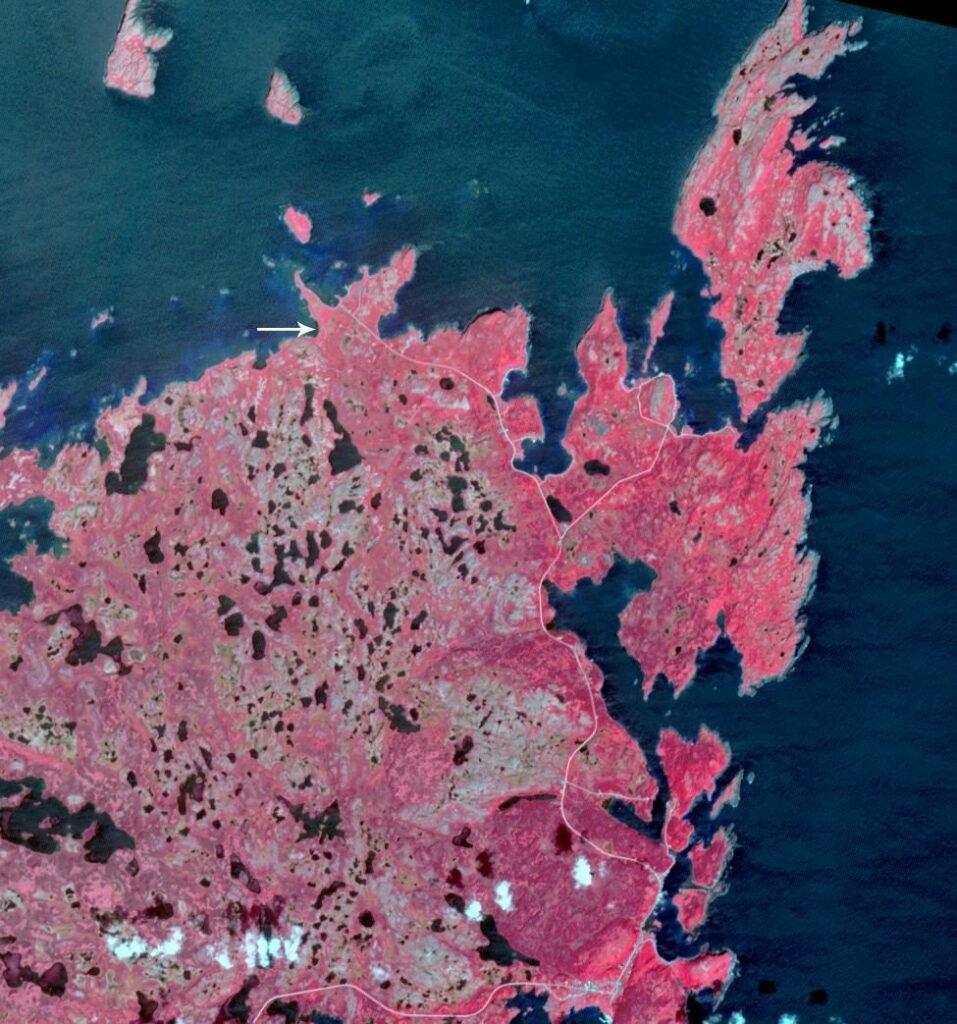
In 2021, scientists dated the site by studying wood. A cosmic-ray event in 993 caused a sudden rise in radiocarbon, a form of carbon used for dating. Trees recorded the rise in their rings. By matching that spike and counting rings out to the bark edge, they found the year each tree was cut. Three pieces of wood cut with metal tools gave the same year, 1021. Those tools were not made by the Indigenous people living in the area at the time. Kuitems and colleagues call 1021 “the only secure calendar date for the presence of Europeans across the Atlantic before the voyages of Columbus” (Nature).
Many pages date Leif Eriksson’s voyage to about the year 1000 (Britannica Kids). The Met says he sailed to Vinland around 1003 (The Met). Nature says how 1021 relates to the wider Norse voyages is a matter for future research. Use 1021 when you need a date backed by physical evidence.
How do we know what the Vikings were like?
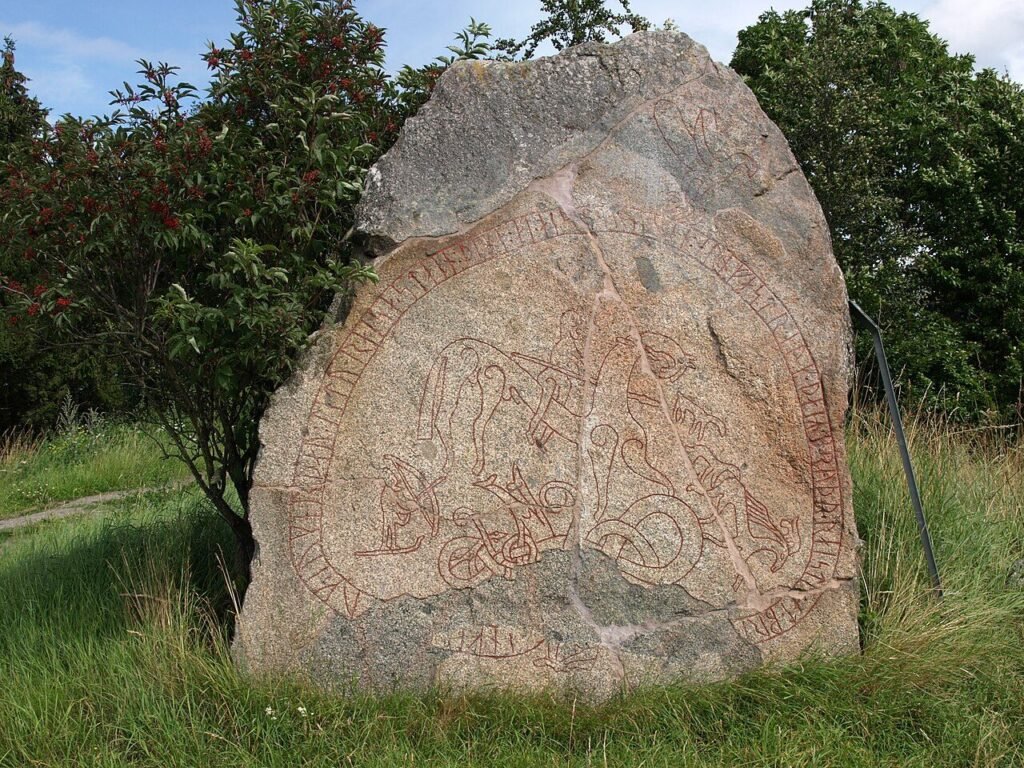
We know about the Vikings from objects they left and from what others wrote. Runic letters carved by Viking visitors have been found throughout the Mediterranean. Around 922, an Arab diplomat named Ibn Fadlan described a Viking chieftain’s funeral in Russia (The Met). He was an outside observer, so his account is not a Viking’s own words. To compare runes with other early writing, read our history of writing page.
Did Vikings wear horned helmets?
No. The National Museum of Denmark says “none of the contemporary sources mention Vikings wearing horned headgear.” It adds that “there is only one preserved helmet from the Viking Age and this does not have horns” (National Museum of Denmark). Few helmets survive, so the claim rests on the finds and the written sources.
The image likely began with Scandinavian artists in the 1800s. Horned helmets found in Denmark are nearly 3,000 years old, which is far older than the Viking Age (Smithsonian Magazine). Treat a horned helmet in a picture as art, not evidence.
Try this: plan a Viking voyage
- Use an atlas or a map from our geography section. Trace a route from Norway to Iceland, then Greenland, then Newfoundland. Name the water you cross.
- A knot is one nautical mile per hour. How many nautical miles would a replica ship cover in 24 hours at 6 knots? At 8 knots? Real crews did not sail nonstop.
- The replica’s draft is 0.95 meters. Why would a shallow draft help a ship reach a beach?
Sources
- The Metropolitan Museum of Art. The Vikings (780-1100)
- Encyclopædia Britannica. Viking
- Britannica Kids. Vikings
- Britannica Kids. Erik the Red
- Encyclopædia Britannica. Lindisfarne raid
- Anlezark, D. Constructing the Anglo-Saxon Chronicles, 2026. Making Time
- University of Bergen. Web copy of D. Whitelock, ed., The Anglo-Saxon Chronicle, 1961. Entries for 789 and 793
- English Heritage. Fulford and Stamford Bridge: The Northern Battles of 1066
- Encyclopædia Britannica. Battle of Stamford Bridge
- The Viking Ship Museum. Sea Stallion from Glendalough
- Parks Canada. L’Anse aux Meadows National Historic Site
- UNESCO World Heritage Centre. L’Anse aux Meadows National Historic Site
- Kuitems, M., et al. Nature 601, 388-391 (2022). Evidence for European presence in the Americas in AD 1021
- National Museum of Denmark. Viking helmets
- Smithsonian Magazine. The Horned Helmets Falsely Attributed to Vikings Are Actually Nearly 3,000 Years Old